

Introduction: Beyond Chatbots – The Rise of agentic artificial intelligence
The world of artificial intelligence is evolving at breakneck speed. What started with rule-based chatbots and pattern-recognition models has grown into agentic AI — a transformative shift where machines don’t just respond, but also act, reason, and adapt. In this new era, agentic artificial intelligence systems represent the leap from reactive automation to autonomous agents that take initiative and collaborate like digital co-workers.
This blog explores what agentic AI is, how it works, where it’s being used (especially in search and workflow automation), and how businesses can harness its full potential.
What Is Agentic AI?
Agentic AI, short for agent-based artificial intelligence, refers to AI systems designed to operate autonomously with defined goals, decision-making capabilities, and interaction dynamics, unlike traditional AI models that require constant human input.
- Interpret complex environments
- Act based on contextual understanding
- Self-correct using feedback
- Collaborate with humans or other AI agents
In essence, agentic artificial intelligence introduces a cognitive loop that blends perception, planning, and action. Think of it as moving from “predictive” AI (which answers) to “proactive” AI (which acts).
How Does Agentic AI Work?
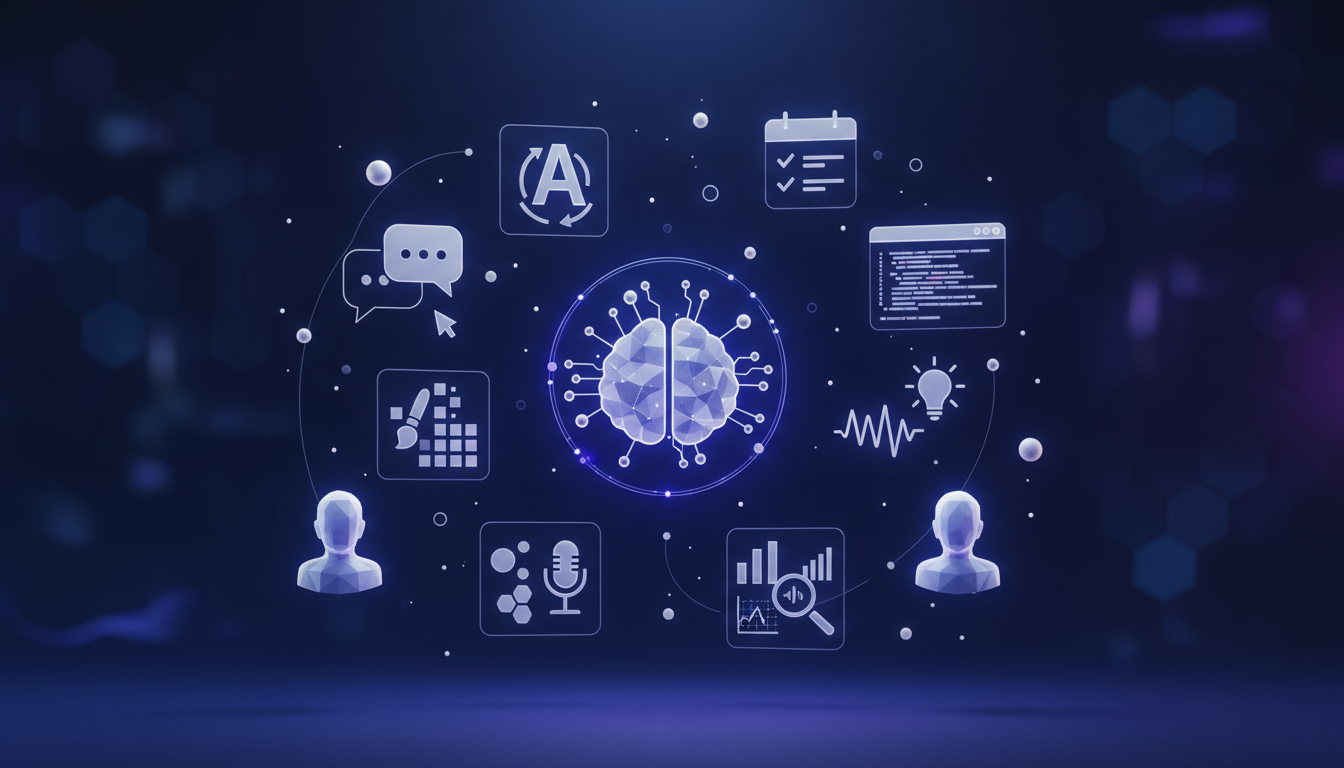
The foundation of agentic artificial intelligence lies in modular design and autonomous reasoning. These systems operate through a multi-agent architecture, where multiple specialized agents collaborate, often within a shared framework.
Key components include:
- Perception Layer – Gathers and interprets data from the environment.
- Goal Definition Layer – Sets objectives either provided by users or inferred contextually.
- Planning Engine – Determines optimal steps to achieve the goal.
- Execution Module – Performs actions across digital platforms (APIs, tools, or workflows).
- Learning Feedback Loop – Reviews outcomes and adjusts future behaviors automatically.
Modern implementations often integrate large language models (LLMs) with memory, reasoning, and API-connected abilities — enabling complex agent-based AI workflows that perform tasks from web search optimization to software testing.
| Feature | Traditional Chatbots | Agentic AI Systems |
|---|---|---|
| Purpose | Respond to pre-defined prompts | Act autonomously to achieve goals |
| Intelligence | Scripted or rule-based | Self-learning and context-aware |
| Adaptability | Static learning model | Dynamic, evolving behaviors |
| Collaboration | One-to-one human interaction | Multi-agent cooperation |
| Example | FAQ bot on a website | AI workflow assistant managing tasks across tools |
Agentic Artificial Intelligence vs Traditional Chatbots. This evolution transforms digital assistants from passive responders to thinking entities capable of problem-solving in real time.
Agent-Based AI Workflows in Action
Modern organizations are already embedding agentic AI systems in their operations to create agent-based AI workflows that reduce human redundancy and enhance decision-making. Some examples include:
- Productivity automation – AI agents scheduling meetings, writing briefs, and updating CRMs.
- Marketing optimization – Multi-agent systems analyzing real-time web data to tailor campaigns.
- Code generation – Agents debugging, testing, and deploying code within DevOps pipelines.
- Customer service – Intelligent helpdesk systems that learn from interactions to offer contextual support.
By integrating these autonomous layers, businesses move from task execution to goal achievement, signaling a paradigm shift in operational intelligence.
The Role of Agentic AI in Search
One of the most exciting applications of agentic AI in search lies in natural language understanding and intent-based retrieval. Instead of returning static results, agentic AI can perform multi-step reasoning:
- Interpret a user’s query deeply (intent + context).
- Search across multiple data sources, not just one.
- Verify and cross-reference information.
- Deliver actionable insights instead of generic answers.
For example, a business analyst could ask an AI agent: “Find market insights from the past quarter and predict our product’s growth trend.” Rather than showing a list of links, the agentic AI executes web searches, builds a dataset, runs analytics, and summarizes the forecast — all autonomously.
This multi-hop reasoning redefines how search engines work, moving from keyword retrieval to purpose-driven discovery.
The Future of Agentic Artificial Intelligence
The next breakthrough in agentic artificial intelligence will combine cognitive autonomy with ethical alignment. Future systems will not only reason and act, but will also understand why certain actions are more valuable than others, aligning behavior to goals and human values.
- Emerging trends include:
- Integration with enterprise knowledge graphs
- Use of memory-augmented logic (persistent learning)
- Decentralized agent ecosystems
- Enhanced explainability and accountability in AI actions
As these capabilities mature, agentic AI will become essential infrastructure for digital transformation, powering everything from business strategy to scientific discovery.
Summary:
- Agentic artificial intelligence marks a shift from reactive chatbots to proactive, decision-making systems.
- Agentic artificial intelligence systems can plan, act, and learn through multi-agent collaboration.
- Agent-based AI workflows streamline automation across industries.
- Agentic artificial intelligence in search transforms keyword-based search into intelligent discovery.
- The future of agentic artificial intelligence focuses on learning, ethics, and autonomy.
Conclusion: Building Authority in the Age of Agentic AI
As we step into this new era of agentic AI, businesses that adopt this technology early will gain a competitive advantage grounded in speed, intelligence, and adaptability. The ability to integrate agent-based workflows, optimize AI-driven search intelligence, and deploy autonomous reasoning systems will define the next generation of digital growth.
Staying informed about these trends not only strengthens your organization’s technological foundation but also enhances its online authority. Continue exploring insights like this on our blog to understand how agentic artificial intelligence is shaping industries — and how you can lead this transformation.
Frequently Asked Questions
What is the main difference between traditional chatbots and Agentic AI?
Traditional chatbots are reactive systems that respond to specific user queries with pre-defined answers, while Agentic AI is proactive and can break down complex goals into sub-tasks, create plans, and execute them autonomously using various tools without constant human intervention.
How does Agentic AI actually learn and improve over time?
Agentic AI uses an iterative learning process where it executes actions, observes outcomes, and self-corrects based on feedback. Its reasoning core can re-assess situations and try different approaches when encountering errors, creating a continuous loop of thought, action, and reflection.
What are some real-world applications of Agentic AI systems?
Agentic AI can handle complex tasks like comprehensive research and report writing, sophisticated trip planning with multiple bookings, enterprise automation for processes like employee onboarding, and advanced search that delivers finished products rather than just links.
Can Agentic AI work with existing software and tools?
Yes, one of the key features of Agentic AI is its ability to use various tools and APIs, including web browsers, code executors, database connectors, and software applications. This allows it to interact with existing systems to complete complex workflows.
Is Agentic AI safe and reliable for business use?
While Agentic AI offers significant productivity benefits, it requires proper oversight and ethical frameworks. Businesses should implement safety measures, validation processes, and human oversight to ensure these systems act in alignment with organizational values and security requirements.